Campus News, Media, Press Releases, Technology
MaKami Staff Co-Authors Research on Generative AI in Student Assessment
Oct
While Generative Artificial intelligence, also known as GenAI, began in the 1950s and 60s, it has advanced by leaps and bounds over the past decade, now being able to create new content such as text, images, audio, video or code in response to a prompt.
In recent years, GenAI’s involvement in education has increased. Instructors can now use it for tasks such as scoring student writing against a checklist, drafting feedback for scores or generating assessments like quizzes.
Although this technology has exciting potential, questions remain about using it for student assessment, which is how educators measure learning and give students feedback on everything from quizzes to assignments and practical examinations.
But research is currently underway on how post-secondary education is using GenAI.
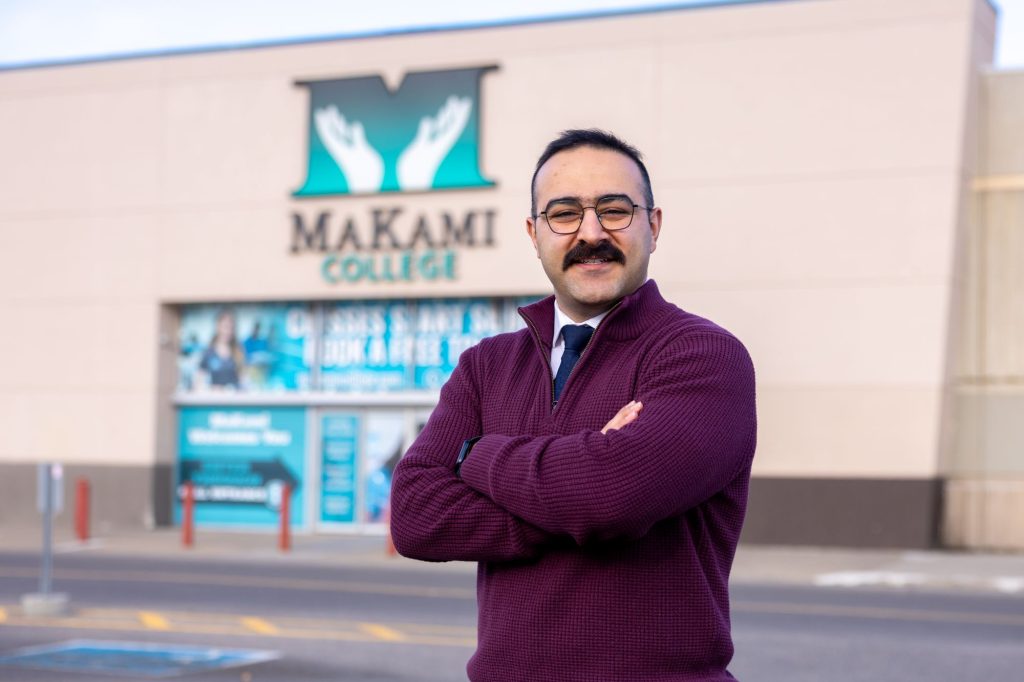
Ali Mikaeili, a University of Calgary Graduate Doctoral Research and Teaching Assistant and a MaKami College Academic Project Manager, is the leading author of one such research paper, “A Scoping Review of Generative Artificial Intelligence Boundaries in Educational Assessment Systems”, published in the Canadian Journal of Learning and Technology.
“I’m thrilled to have been a part of this research at such a pivotal time for GenAI and post-secondary education,” says Mikaeili, who started working on the paper with co-authors and colleagues Reyhaneh Bastani and Saroush Sabbaghan in January 2026.
“Witnessing how technology and education are linked through research helps us to take proactive measures to mitigate potential problems and maximize the best ways to use this tool.”
The review’s findings matter because GenAI is already being used in student assessment, and how it is used depends on decisions that post-secondary institutions make, not just on the technology. Using GenAI in assessment depends a great deal on how institutions set it up. For post-secondary institutions, that could mean clear policies, faculty training and regular review of how it is used.
Although GenAI’s role is increasing, human oversight is still needed to ensure students are assessed fairly and accurately. The studies used in the review did not support the autonomous use of GenAI and suggested a hybrid human-GenAI model because nuance and scrutiny are needed in more complex assessments.
It’s important to note that GenAI is a newer technology and so far, there hasn’t been a great deal of research on how it can affect all aspects of student assessment. Most available research focused on scoring and grading, with far fewer examining assessment design, feedback development, validation and student support. More revalidation is needed in these areas.
Research is also concentrated on writing and language assessment, while professional licensing, STEM problem solving, creative assessment, and online testing are unexplored.
“Institutional responsibilities and student guidance are important, and these areas weren’t consistently and evenly addressed in research,” adds Mikaeili.
More focus is needed to strengthen AI governance and policy, educate faculty and guide and support students.
“What this review suggested was keeping humans in the loop to monitor how GenAI is used in more complex student assessment may be the best way forward.”